

SC&T compared HDBaseT 3.0, SwiftSync, and H.265 technologies in real-world 4K60 transmission tests to determine which delivers the best HDMI extender performance. This report summarizes latency, image quality, and stability evaluated in our recent video with added visuals and data tables to help integrators and engineers choose the most suitable solution for their projects.
1. Introduction
In professional AV integration, extending HDMI signals over long distances while maintaining low latency and clear image quality is always a challenge.
To find out how different technologies really perform, we conducted a side-by-side real-world test using three popular solutions:
- HDBaseT 3.0 – Uncompressed, zero-latency transmission up to 100 meters.
- SwiftSync – Light compression, near real-time response over 1G networks.
- H.265 – High-efficiency compression for bandwidth-limited networks, but introduces visible latency and compression artifacts.
A side-by-side comparison shows how each technology performs under the same conditions, and helps users find the best HDMI extender for their needs, whether it’s for meeting room AV, control center, or remote work station.

2. Test Setup
We created a controlled testing environment to mirror real-world scenarios such as meeting rooms and control centers.
Equipment Tested:
- HDBaseT 3.0 Extender – HE02U-4K6G
- SwiftSync HDMI KVM Extender – HKM01-4K6G
- H.265 HDMI Extender
Setup:
- Source: High-performance PC outputting 4K60Hz video.
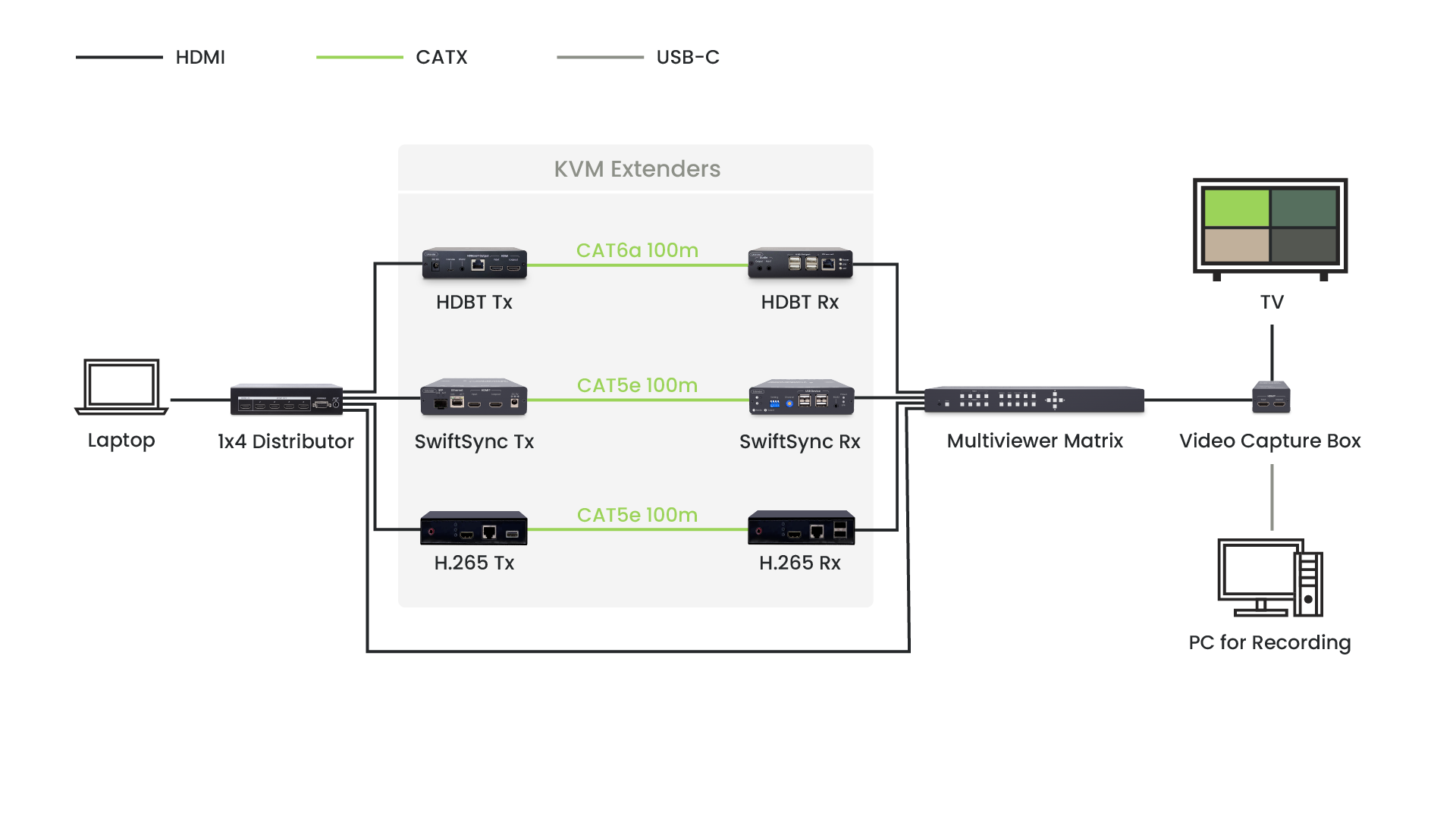
- Distribution: HDMI splitter feeding three KVM extenders, one for each technology.
- Distance: 100 meters of CAT cable for all.
- Display: HDMI matrix showing all signals (including the original source) in a quad-view layout for visual comparison.
- Recording: A 4K HDMI capture box recorded every output for analysis.
This setup ensures every extender faces the same transmission distance, resolution, and testing conditions.
3. Latency Test
Latency defines real-time usability, which is crucial for KVM operations, presentations, and interactive displays. We tested latency in three ways: Timestamp comparison, mouse response, and window drag performance.
Timestamp Comparison
We displayed digital timers showing milliseconds on both the source and receiver screens to measure transmission delay visually.
Watch the video clips and pause anytime to spot the differences frame by frame.
HDMI Extender 100m Latency Test | HDBaseT vs SwiftSync (4K30) vs H.265
HDMI Extender 100m Latency Test | HDBaseT vs SwiftSync (4K60) vs H.265

Test Result
| Technology | Latency | Transmission | Image Quality | Best For |
|---|---|---|---|---|
| HDBaseT 3.0 | <1 ms | Uncompressed | Lossless | Medical imaging, broadcast, control rooms |
| 1G SwiftSync | ~40 ms | Light compression | Near lossless | Meeting rooms, KVM control, industrial monitoring |
| H.265 | 40–300 ms | High compression | Compressed | Surveillance, remote streaming, limited-bandwidth systems |
Mouse Response & Window Drag Test
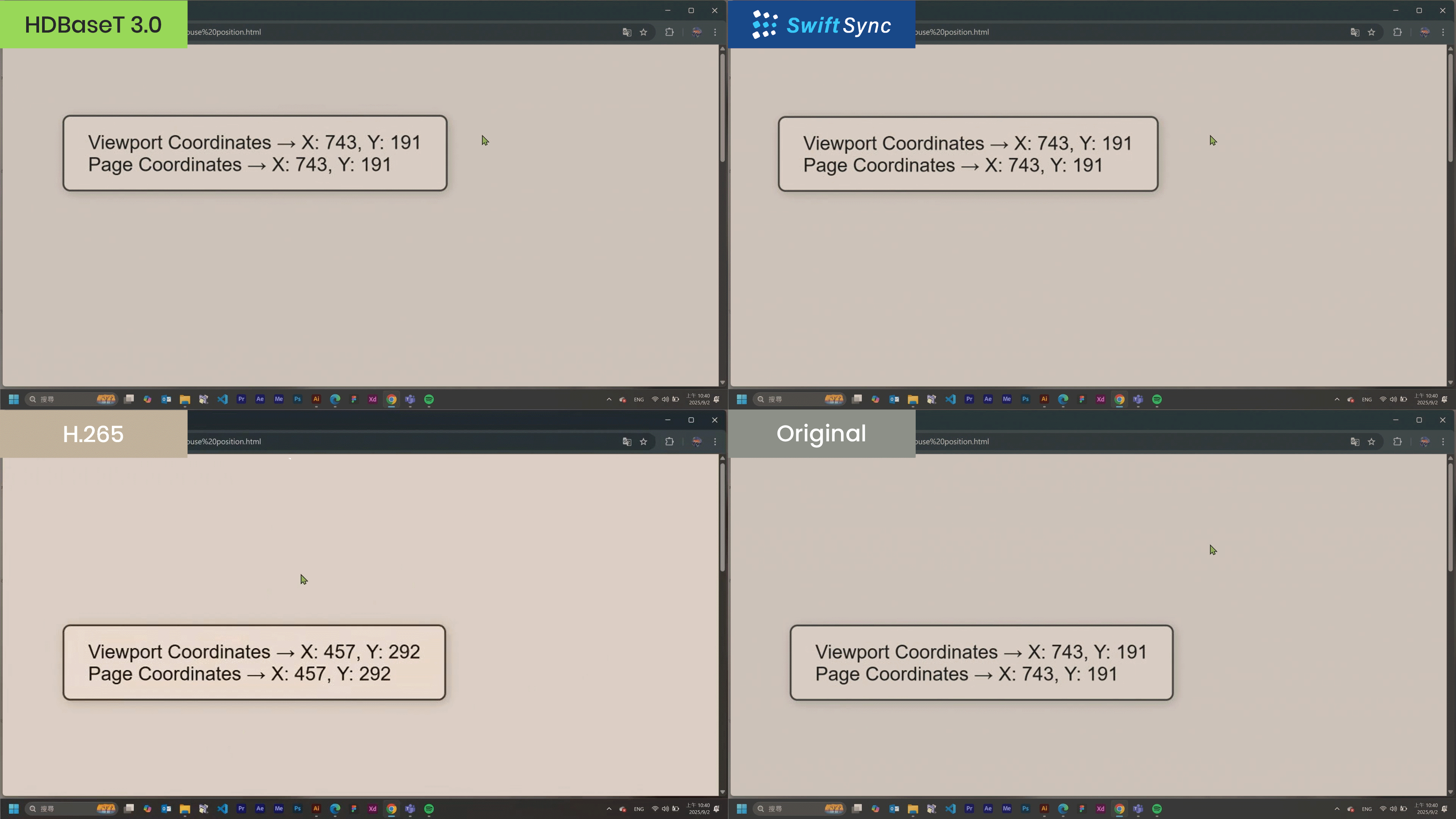
When quickly moving the mouse, cursor alignment was compared frame-by-frame. Dragging windows across the screen further highlights the delay.
Watch the mouse in action and see which extender keeps up.
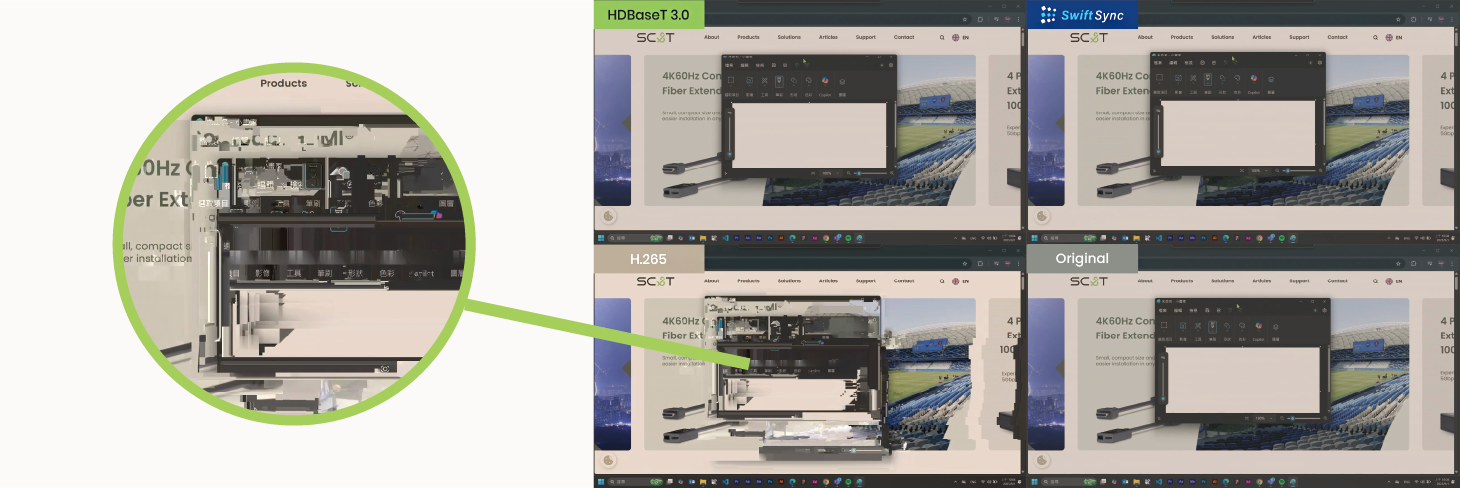
Test Result
For any interactive setup, such as remote desktops, live switching, or control stations, HDBaseT 3.0 and SwiftSync clearly outperform H.265.
Latency simulator for you to experience on your device: https://www.skytopia.com/stuff/lag.html
4. Image Quality Comparison
Video clarity and color accuracy are just as important as speed. We tested each system in both static and moving scenes to check for compression artifacts.
See how each HDMI extender performs at 4K60/4K30 over 100 meters.
HDMI Extender 100m Performance Test | HDBaseT vs SwiftSync (4K30) vs H.265
HDMI Extender 100m Performance Test | HDBaseT vs SwiftSync (4K60) vs H.265
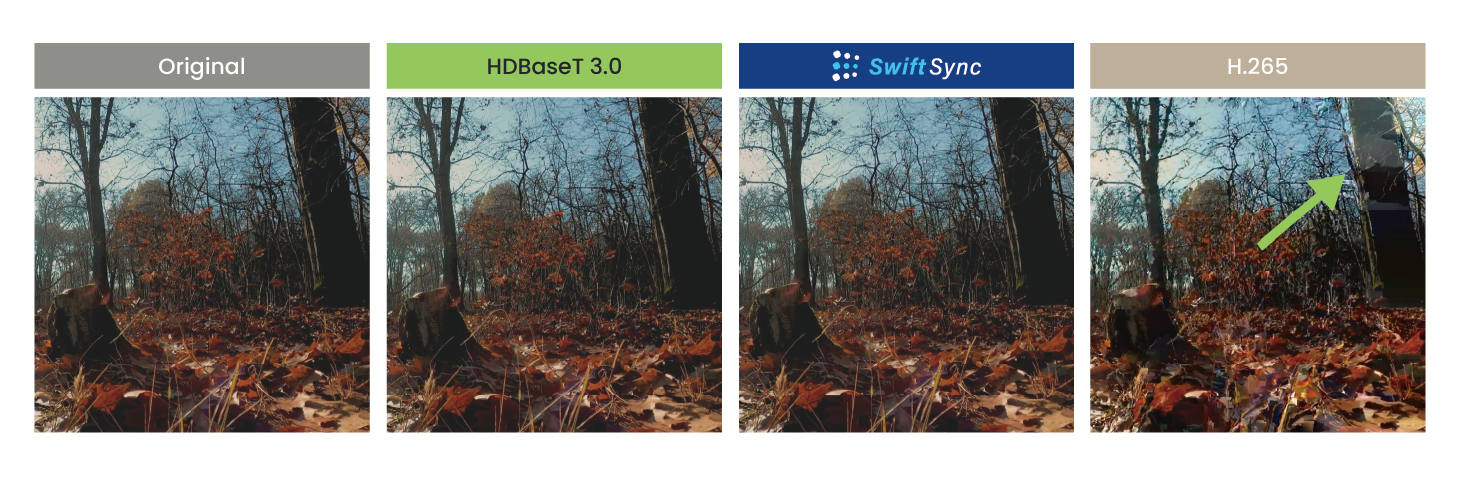
Test Result
HDBaseT 3.0 delivers the best overall image quality. SwiftSync follows closely, offering impressive sharpness for its bandwidth. H.265 is best reserved for non-critical viewing or streaming.
5. Application Recommendations
- HDBaseT 3.0 is the top choice when precision matters most.
- SwiftSync offers the best balance of cost, performance, and usability.
- H.265 remains a practical option for network-based video delivery where real-time control isn’t required.

6. Conclusion
This test demonstrates how transmission technology directly affects real-world user experience. While HDBaseT 3.0 leads with zero-latency, uncompressed performance, SwiftSync proves to be a strong, cost-efficient alternative for most 1G environments. Meanwhile, H.265 continues to serve well for surveillance and remote streaming applications where bandwidth is limited.
At Smart Cabling & Transmission (SC&T), we continue to innovate reliable transmission solutions that meet diverse AV integration needs.
For detailed visuals and live comparison footage, watch our full test video on YouTube.
HDBaseT 3.0 vs H.265 vs SwiftSync Performance Test [Full Video]
Original Article: HDMI Transmission Technology Test Report: HDBaseT 3.0 vs H.265 vs SwiftSync
This content is used with permission from SC&T. All rights reserved.